

 Current position > News detail
『Agilent Precision Gas Flow Meter: Laboratory Grade Calibration Masters』Related information(clamp on meter|electromagnetic meter|venturi meterrotameter|orifice meter|ultrasonic flow meter|mass flow meter|coriolis mass flow meter|coriolis flow meter|magnetic flow meter|magmeter flow meter|magflow flow meter|mag meter flow meter|electromagnetic flow meter|vortex flow meter|turbine flow meter|thermal mass flow meter|thermal flow meter|rotameter flow meter)
Agilent Precision Gas Flow Meter: Laboratory Grade Calibration Masters
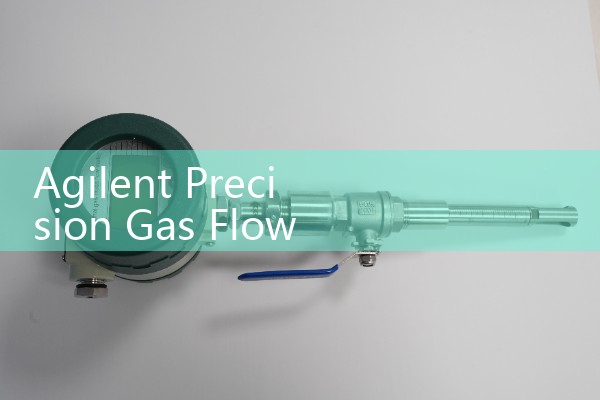
Quick Answer: A laboratory grade calibration master for gas flow needs repeatable accuracy across low and mid range flows. The Agilent precision gas flow meter line is used as a transfer standard in many calibration labs for mass flow controllers and thermal gas meters. Silver Instruments supplies industrial flow meters and can help you choose a field instrument that matches your calibration range and process conditions.
Calibration labs in Singapore, Malaysia, Vietnam and the Middle East handle many of the same tasks. They verify mass flow controllers, rotameters, thermal mass flow meters and small Coriolis meters. A reliable reference meter eliminates moisture, temperature and pressure drift issues that cause bad readings. The Agilent precision gas flow meter is often the reference device on these benches because it repeats well across different gases.
Most engineers skip one part during procurement. They focus on maximum flow rate and forget about the low end of the range. A calibration master should hold accuracy from 1 percent to 100 percent of full scale. If the reference meter drifts at low flow, every downstream sensor gets a false offset. In practice, dry clean gas lines and stable inlet pressure matter as much as the meter itself.
What a Laboratory Grade Calibration Master Means
A calibration master is not a normal process meter. It carries traceable documentation, a tighter uncertainty band and a defined calibration gas. When a lab calibrates a mass flow controller for nitrogen service, the master flow reference must be calibrated with nitrogen or a gas with published conversion factors. The Agilent precision gas flow meter range fits this because many units accept multiple gas calibrations and store conversion factors internally.
We have seen customer sites in Southeast Asia use these meters for semiconductor gas panel checks. The gas panel may run argon, helium or nitrogen at 50 sccm to 500 slm. One reference meter with fast response and low zero drift saves time during shift changes. The lab technician can verify six mass flow controllers in one hour without waiting for thermal stabilization.
The typical setup includes a regulated gas cylinder, a pressure regulator, a reference flow meter and the unit under test in series. Inlet pressure stays fixed at 2 bar g or 5 bar g depending on the flow range. The reference meter displays slm, sccm, kg/h or percent full scale. The Agilent precision gas flow meter gives a live reading that the technician compares against the device output.
Where Agilent Precision Gas Flow Meters Fit
Laboratories in the pharmaceutical and environmental sectors use these meters for pump calibration, ambient air sampling and stack gas analyzer checks. A lab in Thailand may run daily calibrations of low flow sample pumps at 25 ml/min to 5 L/min. The same lab can use a higher range module for 200 L/min calibration of filter test rigs. This modular approach is common because laboratories rarely work at one fixed flow range.
Oil and gas research centers in the Middle East also apply these reference meters for catalyst testing. A test rig may need hydrogen, carbon dioxide or mixed gas flow from 0.1 slm to 100 slm. The reference meter must handle a wide turndown and keep the uncertainty small. When the catalyst test runs for 30 days, the reference meter should not drift more than the allowed error.
Here is the thing. A precision gas flow meter in a laboratory is not a direct replacement for an industrial field meter. It does not need heavy enclosure ratings or long cable runs. It needs clean gas, controlled temperature and regular calibration. That is why labs keep it as a master and not as a process device.
Practical Calibration Setups and Gas Types
Most calibration benches use dry nitrogen because it is clean, safe and easy to source. Argon and helium appear in semiconductor and leak test applications. Carbon dioxide and air are common in food packaging and environmental labs. The Agilent precision gas flow meter supports these gases when the correct calibration factors are loaded. Some labs keep one meter for nitrogen only and another for air to avoid cross contamination.
Pressure and temperature matter in gas flow calibration. A flow meter calibrated at 20 degrees Celsius and 101.325 kPa will show a different reading at 30 degrees Celsius or 3 bar g. Good calibration benches fix the inlet pressure with a high
We often tell customers to write down the line pressure, gas temperature and pipe size before requesting a quote. A 10 percent change in absolute pressure can create a 10 percent error in gas volume flow if the meter reads volumetric units. Mass flow meters avoid this problem because they measure kg/h or slm directly.
Field Instruments vs Laboratory Calibration Masters
Field instruments from Silver Instruments cover the industrial side of flow measurement. Electromagnetic flow meters, vortex flow meters, ultrasonic flow meters and Coriolis mass flow meters handle wet gas, steam, chemicals, water and wastewater. A laboratory calibration master is not meant for those conditions. Instead, the lab master verifies the small gas meters that later go into analyzers, control panels and test rigs.
For a field gas mass flow application, a Coriolis mass flow meter often works better than a thermal meter. A Coriolis meter measures mass directly, handles pressure changes and works with clean gas or liquid. Silver Instruments supplies Coriolis mass flow meters with 4-20 mA HART output, DN15 to DN80 line sizes and accuracy around 0.2 percent of reading. These meters suit industrial gas flow, fuel gas measurement and pilot plant mass balance.
If your calibration lab also needs a field reference for compressed air or natural gas, the same Coriolis meter can be used as a portable or skid mounted standard. The meter does not need a laboratory environment. It can operate at 10 bar, 40 bar or higher depending on the process connection and materials.
Recommended Silver Instruments Flow Meters for Industrial Loops
For gas and liquid mass flow, choose the Silver Instruments Coriolis mass flow meter series. Standard options include DN15, DN25, DN40, DN50 and DN80 wafer or flange connections. Output is 4-20 mA HART with pulse and RS485 Modbus on many models. Accuracy of 0.2 percent of reading works across a wide turndown. This makes the meter suitable for chemical dosing, fuel gas skids, food grade liquid and pilot plant reactors.
For water and wastewater flows larger than DN80, electromagnetic flow meters are a better fit. They measure conductive liquids from 0.2 µS/cm upward. Typical accuracy is 0.2 to 0.5 percent of reading. Liners include PTFE and hard rubber. Electrode options include stainless steel, Hastelloy, titanium and tantalum.
For steam and compressed air, vortex flow meters cover DN15 to DN300 with temperature and pressure compensation. They handle saturated steam at 10 bar and superheated steam to 250 degrees Celsius. A vortex meter outputs 4-20 mA and often includes a local totalizer.
Five Common Questions
1. Can an Agilent precision gas flow meter be used for custody transfer?
No. These meters are laboratory grade calibration masters and reference devices. Custody transfer needs approved industrial flow meters with local regulatory certification.
2. Which gas flow range should I choose for a calibration bench?
Select a range that covers at least 1 to 100 percent of your largest mass flow controller span. Do not oversize the reference meter by more than 50 percent because low end uncertainty increases.
3. Does Silver Instruments sell Agilent precision gas flow meters?
We supply industrial process flow meters such as Coriolis, electromagnetic, ultrasonic and vortex types. For laboratory gas calibration masters, we can help specify the correct reference and connect you with calibration support.
4. What information do I need to send for a flow meter quote?
Send gas type, flow range in slm or kg/h, inlet pressure in bar, temperature in degrees Celsius, pipe size in DN and output signal. Also tell us if you need NIST traceable calibration or hazardous area certification.
5. Can the same Coriolis meter measure gas and liquid?
Yes. Many Silver Instruments Coriolis mass flow meters handle both phases. You can use one meter for process water and clean gas if the density range and flow rates are compatible.
Contact Silver Automation Instruments
Send us your gas type, pressure, temperature, pipe size and flow range. Our engineers can recommend a field flow meter that fits your process and calibration plan.
Tel: +86-25-68650347
Whatsapp: +86-25-52155837
WeChat: +86 15365082610