

 Current position > Product detail
『Fluidic Flow Meter: Oscillating Coanda Effect Vortex Processing Devices』Related information(clamp on meter|electromagnetic meter|venturi meterrotameter|orifice meter|ultrasonic flow meter|mass flow meter|coriolis mass flow meter|coriolis flow meter|magnetic flow meter|magmeter flow meter|magflow flow meter|mag meter flow meter|electromagnetic flow meter|vortex flow meter|turbine flow meter|thermal mass flow meter|thermal flow meter|rotameter flow meter)
Quick Answer
A fluidic flow meter uses the oscillating Coanda effect to measure liquid or gas flow without moving parts, which means high reliability in dirty or low-viscosity applications. Silver Instruments supplies these oscillating vortex processing devices in sizes from DN15 to DN200, with 4-20 mA HART output and stainless steel body. The frequency output is linear with flow, making it simple to integrate into PLC or batch control systems.
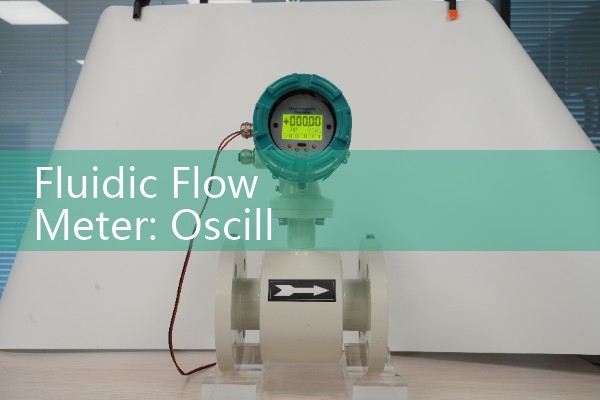
Fluidic Flow Meter: Oscillating Coanda Effect Vortex Processing Devices
Engineers often ask for a flow meter that can handle low flows, low conductivity fluids, or slightly dirty process water. The fluidic oscillation meter based on the Coanda effect is one option that does exactly that. It works by causing the fluid to attach to a shaped wall, then switching the stream from one side to the other through a feedback channel. That switching creates a regular oscillation. The frequency of this oscillation is proportional to flow velocity. Because there are no bearings, rotors, or electrodes in the flow stream, the meter tolerates some particles and bubbles that would stop a turbine meter or create noise on a magmeter.
Most engineers skip the detailed fluid dynamics and look at the practical side. In practice, a fluidic Coanda meter works best with clean liquids and gases that have low to medium viscosity. We have seen them installed on demineralized water lines, diesel fuel transfer, solvent dosing, and even CO2 gas measurement. Last year a customer in Vietnam asked us for a meter to measure a paint solvent blend at 0.8 cP and 25 degree C. We recommended a DN15 fluidic oscillator with PTFE lining and 4-20 mA HART protocol. The repeatability stayed within 0.2% of reading over six months of operation. That is the kind of data we gather from sites across Southeast Asia and the Middle East.
Silver Instruments offers fluidic oscillation flow meters under the OLF series. The OLF comprises a 316L stainless steel body, sizes DN15 to DN100 as standard, with larger diameters up to DN200 available on request. Accuracy is plus/minus 1.0% of reading for liquids and plus/minus 1.5% for gases. Turndown ratio is 10:1, sometimes 15:1 depending on the media and pressure. The output can be a frequency pulse, 4-20 mA analog, or HART digital communication. Process temperature range is minus 20 degree C to 120 degree C. Wetted materials are stainless steel and optional Hastelloy for aggressive chemicals. You can also get ATEX Zone 2 or Zone 1 certification for gas and vapour applications. We ship these meters ready with an NPT, BSP, or flanged process connection per your piping standard.
Here is the thing about installation. You need a straight run of 10 pipe diameters upstream and 5 diameters downstream to keep the flow profile stable. But the oscillating meter is less sensitive to swirl than an orifice plate. Field technicians in a desalination plant in Saudi Arabia told us they replaced a turbine meter with our DN50 OLF fluidic meter on brine recycle line. The previous turbine kept clogging with salt crystals. The fluidic meter handled the suspended solids with no maintenance for over a year. They now use the same model on three additional skids.
On the digital side, the OLF meter comes with an integrated or remote display showing instantaneous flow rate in m3/h or kg/h, and totalized volum
What about price. A fluidic oscillating meter is not the cheapest device on the market, but the total cost of ownership is very attractive when you factor in zero moving parts maintenance. Send us your pressure, temperature, pipe size, and flow range, and we will return a specific quotation within one working day. Contact Silver Automation Instruments by email at [email protected] or call Tel: +86-25-68650347. You can also reach us on WhatsApp: +86-25-52155837 or WeChat: +86 15365082610. We respond in English, Spanish, Portuguese, Arabic, and other languages for industrial buyers.
What is a fluidic flow meter and how does it differ from a standard vortex meter?
A fluidic flow meter uses the Coanda effect and a shaped oscillation chamber to generate a flow-proportional frequency. A standard vortex meter relies on a bluff body to create Karman vortex shedding. The fluidic design can work at lower Reynolds numbers and has no shedder bar that can catch debris. This gives it an edge in low-flow and dirty fluids.
How does the Coanda effect create oscillation?
A fluid jet enters a chamber and attaches to one curved wall due to the Coanda effect. A pressure feedback port then pushes the jet to the opposite wall. This cycle repeats and creates a steady oscillation. The frequency is proportional to flow rate and is sensed by a piezoelectric or thermal sensor outside the flow path.
Which fluids work with the oscillating Coanda flow meter?
Clean to slightly dirty liquids with viscosity up to about 10 cP are ideal. Examples include water, diesel, solvents, light chemicals, liquid CO2, and compressed air. High-viscosity oils above 50 cP will dampen the oscillation and reduce turndown. We can test your fluid data if you send viscosity, density, and flow range to our application team.
What accuracy and turndown ratio can I expect from Silver Instruments fluidic meters?
Standard accuracy is plus/minus 1.0% of reading for liquids and plus/minus 1.5% for gases. Turndown ratio is typically 10:1, extendable to 15:1 for low-viscosity liquids. Repeatability is better than 0.2% under stable conditions. These numbers are verified on a NIST-traceable calibration rig before shipment.
How do I order a fluidic oscillating flow meter from Silver Instruments?
Send us your pipe diameter, process media, temperature, pressure, required flow range, and output signal preference (4-20 mA, pulse, HART). We will select the correct OLF model with material options and certifications. Email [email protected] or use WhatsApp +86-25-52155837 for a fast quote. Delivery time is typically 2 to 4 weeks for standard configurations.