

 Current position > Product detail
『F 2000 Flow Meter Review: Blue-White Digital Paddlewheel Flowmeter Field Setup』Related information(clamp on meter|electromagnetic meter|venturi meterrotameter|orifice meter|ultrasonic flow meter|mass flow meter|coriolis mass flow meter|coriolis flow meter|magnetic flow meter|magmeter flow meter|magflow flow meter|mag meter flow meter|electromagnetic flow meter|vortex flow meter|turbine flow meter|thermal mass flow meter|thermal flow meter|rotameter flow meter)
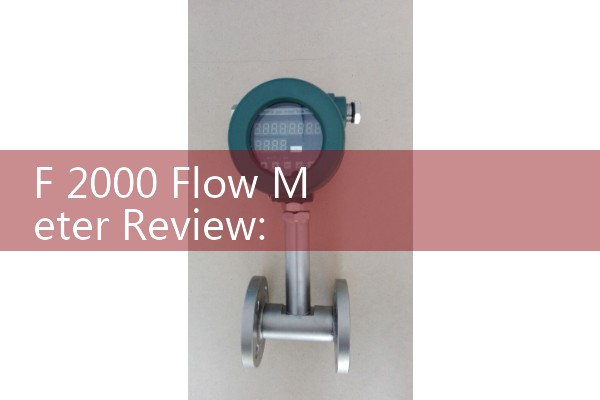
F 2000 Flow Meter Review: Blue-White Digital Paddlewheel Flowmeter Field Setup
Quick Answer: The Blue-White F-2000 is a digital paddlewheel flow meter for clean water and light chemical lines. Field setup requires the correct pipe inside diameter, K-factor, flow units, and output range. The paddlewheel sensor is not suitable for dirty or sticky fluids. Silver Automation Instruments recommends a magnetic flow meter for those conditions.
What Is the Blue-White F-2000?
The F-2000 is an insertion paddlewheel flow meter with a digital display. It measures flow from the rotation speed of a paddlewheel sensor inserted into the pipe. It works best with clean water, cooling water, RO permeate, and some light chemical solutions. The meter is common in water treatment skids, irrigation lines, and pool dosing systems.
Most units ship with a local display that shows flow rate and total. Some configurations include a 4-20 mA output or pulse output. The display menu lets you enter pipe inside diameter, K-factor, units, and output range. In practice, many installation errors come from wrong pipe ID or a K-factor copied from the wrong meter manual.
Field Setup Summary for the Blue-White F-2000
You need four values before you start: pipe inside diameter in mm or inches, the K-factor from the meter body or label, flow units, and full scale output if you use 4-20 mA. Power up the meter and enter the setup menu. Select pipe ID first. Then enter the K-factor. Then choose flow units such as liters per minute, gallons per minute, or cubic meters per hour. After that set the display decimal point and damping if available.
Sensor insertion depth matters. The paddlewheel must sit at the correct depth in the pipe. If the sensor is half out of the flow stream, the reading will be low. If the pipe has scale on the inside wall, the ID you enter may not match the real wetted ID. Most engineers skip this part, but it causes a 5 to 10 percent error on small pipes.
Step-by-Step Field Setup Notes
First, install the sensor in a straight pipe run. Blue-White recommends 10 diameters upstream and 5 diameters downstream. Do not put the sensor right after a pump or a partially closed valve. Air bubbles and swirl will make the paddlewheel read high or unstable.
Second, set the K-factor exactly. The K-factor converts paddlewheel pulses into flow rate. On some F-2000 models the K-factor changes with pipe size and fitting material. Do not use the same K-factor from another installation. It will not be accurate.
Third, verify the display with a known volume. Fill a container of known size downstream and compare the totalizer. This is the fastest field check. If the total is off by more than 3 percent, check insertion depth, pipe ID, and straight run first.
Here is the thing. The F-2000 setup looks simple on the bench. But field conditions change. Pipe scale, air bubbles, and small solids are the usual problems. Always compare the display against a known volume before you trust the totalizer.
Key Specifications and Limits
The F-2000 works in pipe sizes from about 1.5 inches to 12 inches depending on the fitting. The temperature limit is usually around 60 to 90 degrees Celsius for plastic bodies. Pressure limits are lower in PVC fittings, often under 10 bar at ambient temperature. The paddlewheel has moving parts, so solids, fibers, or scale will stop the rotor or reduce accuracy.
For dirty water, wastewater, slurries, or liquids that form crystals, a paddlewheel flow meter is not the right tool. A magnetic flow meter has no moving parts and does not need the same straight run. Silver Automation Instruments supplies inline magnetic flow meters f
When the F-2000 Fits the Application
The F-2000 is a good fit for clean water skids, cooling tower makeup lines, swimming pool filtration, and water transfer lines with low solids. It is also easy to install in existing PVC pipe. Because the sensor is insertion style, you can remove and clean it without cutting the pipe in most systems.
But the meter is not ideal for chemical injection points. If ferric chloride, sodium hypochlorite, or polymer is injected upstream, solids and gas can collect on the paddlewheel. We have seen this on customer sites in Southeast Asia and the Middle East. The reading becomes unstable after a few weeks.
When a Silver Instruments Meter Is a Better Fit
We work with water and wastewater contractors across Australia, Vietnam, the Philippines, Saudi Arabia, and Mexico. Many of them start with a paddlewheel meter because it is low cost. After maintenance issues, they move to a Silver Automation Instruments electromagnetic flow meter. A magnetic flow meter does not block the pipe. It has no rotor. It handles a wider range of conductivity and suspended solids.
For example, a wastewater contractor in the Philippines replaced an F-2000 style meter after the paddlewheel fouled in less than two months. The line carried screen filtered effluent with fine fibers. A Silver Automation Instruments inline electromagnetic flow meter, DN80, with 0.5 percent accuracy and 4-20 mA HART output, solved the problem. It has been running for one year without cleaning.
Recommended Silver Instruments Alternatives
For clean water and cooling water, choose a Silver Automation Instruments inline electromagnetic flow meter with DN25 to DN200, 4-20 mA HART, and optional RS485 Modbus. It gives stable readings with no moving parts. For irrigation or large pipes above DN200, ask us about clamp-on ultrasonic flow meters. For chemical dosing where the liquid is non-conductive, a Silver Automation Instruments oval gear flow meter or a thermal mass flow meter may be better.
FAQ: F-2000 Flow Meter Setup and Replacement
Question: What is the main setup mistake on the F-2000 flow meter?
Answer: Wrong pipe ID or wrong K-factor. Check the sensor label and the actual pipe inside diameter before saving settings.
Question: Can the F-2000 measure wastewater?
Answer: Not reliably. The paddlewheel will foul with fibers, sludge, or scale. Use a magnetic flow meter for wastewater.
Question: Does the F-2000 need a straight run?
Answer: Yes. Use about 10 pipe diameters upstream and 5 downstream. Avoid pumps, elbows, and half open valves before the sensor.
Question: What is a good replacement for the F-2000 in dirty water?
Answer: A Silver Automation Instruments inline electromagnetic flow meter in the same pipe size. It has no moving parts and offers 4-20 mA HART output.
Question: Can I get a price for a replacement magnetic flow meter?
Answer: Yes. Send us your pipe size (DN), flow range, liquid type, pressure, and temperature. Use the contact numbers at the end of this review.
Get a Field Setup Check or Replacement Quote
If you are installing an F-2000 and the reading is unstable, send us the pipe ID, K-factor, flow range, and a photo of the sensor location. We help distributors and end users in Southeast Asia, Oceania, Latin America, Africa, and the Middle East. Our engineers can recommend a direct replacement or a better meter for the same loop. Send your pressure (bar), temperature (°C), pipe size (DN), and flow range. Tel: +86-25-68650347 or WhatsApp: +86-25-52155837. WeChat: +86 15365082610.