

 Current position > News detail
『High Pressure Mass Flow Meter: Gases and Liquid Chemical Custody Transfer Tools』Related information(clamp on meter|electromagnetic meter|venturi meterrotameter|orifice meter|ultrasonic flow meter|mass flow meter|coriolis mass flow meter|coriolis flow meter|magnetic flow meter|magmeter flow meter|magflow flow meter|mag meter flow meter|electromagnetic flow meter|vortex flow meter|turbine flow meter|thermal mass flow meter|thermal flow meter|rotameter flow meter)
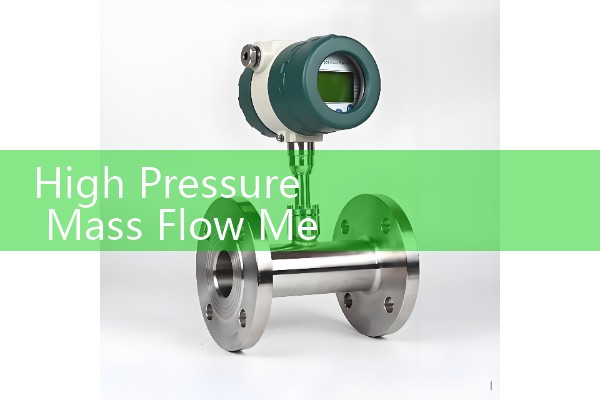
High Pressure Mass Flow Meter for Gases and Liquid Chemical Custody Transfer
Quick Answer
A high pressure mass flow meter designed for custody transfer measures directly in kg/h or lb/min, no need for separate pressure and temperature compensation. For gases like high pressure natural gas or liquid chemicals such as ethylene oxide, a Coriolis meter from Silver Automation Instruments handles pressures up to 345 bar (5000 psi). You get 0.1% of rate accuracy, ATEX Zone 1 certification, and full compliance with API and MID MI-005 standards for billing applications.
Why Mass Flow Matters in High Pressure Systems
Volumetric flow meters fall apart in high pressure gas and liquid chemical service. Density changes with pressure. Temperature swings cause volume expansion. A turbine or vortex meter gives you cubic meters per hour, but what you really need is the number of kilograms transferred. This difference makes or breaks a custody transfer audit. A mass flow meter measures directly what matters for the invoice.
We see this problem often in natural gas distribution lines across Southeast Asia. A distributor in Thailand ran a vortex meter at 200 bar. Density shifted 6 percent between winter and summer. The buying and selling parties argued over the bill for two months. After switching to a Silver Instruments Coriolis mass flow meter, the argument stopped. The meter shows mass flow, density, and temperature on one display. No compensation math. No disagreement.
High Pressure Coriolis Meters Keep Custody Transfer Honest
Coriolis technology works the same at 50 bar or 345 bar because the measurement depends on the Coriolis force generated by fluid momentum. In a high pressure chemical custody transfer situation like anhydrous ammonia loading, the meter does not need inlet straight runs. The bent tube design cancels out vibration and pressure effects. Our high pressure models use thick wall 316L stainless steel with full penetration welds. No internal elastomers. No gaskets that creep under cyclic pressure.
Here is the thing most engineers skip. The secondary containment on a high pressure Coriolis meter is rated for the same pressure as the primary tube. If a customer pumps liquid chlorine at 80 bar, we supply a secondary containment burst rating above 400 bar. This detail matters for safety audits on chemical terminals in the Middle East.
For gaseous applications, such as high pressure hydrogen transport metering, the dual tube design handles low density fluids down to 0.001 g/cm3 while staying within 0.1 percent accuracy. The transmitter outputs mass flow, density, and concentration via 4-20 mA HART and Modbus RTU. You plug in the process pressure and temperature limits, the meter does the rest.
Liquid Chemical Custody Transfer: Where Most Meters Struggle
High pressure liquid chemicals often have low viscosity, high vapor pressure, or a tendency to flash. An oval gear meter seizes when polymerization happens. A differential pressure meter loses accuracy when the beta ratio plug with debris. A high pressure Coriolis mass flow meter from Silver Instruments does not touch any moving parts in the flow stream. The tube vibrates at a small amplitude. The fluid sees only smooth bends. This makes it the preferred tool for isocyanate loading in South America, liquid CO2 custody transfer in Australia, and vinyl chloride monomer transfer in African ports.
One application worth mentioning is LPG mass metering under high vapor pressure. A customer in the Philippines runs a LPG loading skid at 25 bar. They needed a meter that measures mass flow in tonnes per hour and separates the vapor phase from liquid. The Coriolis meter detects two phase flow instantly and raises an alarm. This prevents billing errors when the pump draws vapor instead of liquid.
Installation Requirements That Actually Matter
In practice, a high pressure mass flow meter does not like cavitation. You must keep back pressure at least 1.3 times the fluid vapor pressure. We size the meter correctly using your viscosity in cP, density in kg/m3, and operating temperature in degrees C. The pipe size may be DN15 for a small chemical additive line or DN80 for a bulk ethylene oxide transfer. The pressure class can go from PN40 up to PN345 or ASME Class 2500 flanges.
We recommend mounting the meter with the flow direction upwards for liquids that flash. This keeps the tubes full. For gases, mounting sideways with the electronics housing pointing down works best. Wiring is simple: 24 V DC power, one 4-20 mA HART lo
How a Silver Instruments High Pressure Mass Flow Meter Saves Money
Most engineers calculate the cost of a meter purchase only. The bigger cost hides in calibration drift, argument settlements, and audit failure. A Coriolis meter does not drift. The meter factor stays within 0.05 percent for years because there is nothing to wear. We had a customer in a desalination plant who used a high pressure brine metering pump and a venturi. They recalibrated the venturi twice a year, spending AUD 8,000 each time on third party flow labs. A DN25 high pressure Coriolis meter eliminated that cost and improved the chemical dosing accuracy for antiscalant injection.
Another hidden saving is zero point verification. With the push of a button and a closed valve, the transmitter checks the zero under process pressure. No removal. No bypass line. In custody transfer, this quick check meets the daily proving requirement in many local metrology codes.
Technical Specifications You Should Ask for
Before you request a quote, prepare the following: the fluid name, operating pressure in bar, temperature in degrees C, minimum and maximum flow rate in kg/h or tonnes per day, pipe size DN, and required certification (ATEX, IECEx, or SIL 2 for safety systems). We will recommend the correct high pressure mass flow meter model number with flange rating, wetted material, and transmitter option.
Our standard high pressure Coriolis meters come with 4-20 mA HART, pulse, and RS485 Modbus. You can add a local display with touch buttons for batch control. Accuracy is 0.1 percent of rate for liquids and 0.35 percent for gases under high pressure. Repeatability sits at 0.05 percent. The meter body material is 316L stainless steel, and for aggressive chemicals we offer Hastelloy C22 tubes. Pressure up to 345 bar and temperature up to 200 degrees C are possible on the same sensor body.
Frequently Asked Questions
Can a high pressure mass flow meter measure both gas and liquid in one line?
Yes, a Coriolis meter measures mass flow regardless of phase. If the process switches between liquid chemical and gas purge, the same meter handles both as long as the density is within range. The transmitter reports actual density live, so the operator sees the transition in real time.
What makes a Coriolis meter acceptable for custody transfer in Australia?
In Australia, the National Measurement Institute (NMI) requires a pattern approval under MI-005. Silver Instruments provides high pressure Coriolis meters with NMI pattern approval certificate for liquid applications. For gas custody transfer, the meter must meet the local test procedures. Our engineers can supply the test report and meter factor for your specific fluid.
Do we need a flow computer if we already have a SCADA system?
For simple custody transfer where mass flow is the billing unit, the meter pulse output can connect directly to a PLC or remote I/O. The flow totalizer inside the transmitter stores the accumulated mass flow. If you need gas volume conversion to standard conditions, a flow computer or the built-in density function on the Silver Instruments transmitter can calculate standard volume flow based on the gas composition entered.
How do you handle high pressure leak testing on the meter?
Every high pressure mass flow meter undergoes a hydrostatic test at 1.5 times the rated pressure for at least 30 minutes. We supply the test certificate with the serial number of the sensor. For extremely hazardous chemicals like chlorine or hydrogen sulfide, we can add a helium leak test report.
Is a straight run required upstream or downstream?
A Coriolis mass flow meter does not need any straight pipe run. You can install it right after a pump, after a control valve, or in a tight skid. This saves space on offshore platforms and chemical injection modules. The only installation restriction is to avoid resonance with strong pump pulsation. We size the meter tubes to avoid the excitation frequency of your pump.
For a high pressure mass flow meter quote for gases or liquid chemical custody transfer, send us your required pressure, temperature, flow range, and pipe size. Contact Silver Automation Instruments at Tel: +86-25-68650347, Whatsapp: +86-25-52155837, or WeChat: +86 15365082610. We will provide a model recommendation with price and delivery time within one working day.