

 Current position > Product detail
『annubar flowmeter 』Related information(clamp on meter|electromagnetic meter|venturi meterrotameter|orifice meter|ultrasonic flow meter|mass flow meter|coriolis mass flow meter|coriolis flow meter|magnetic flow meter|magmeter flow meter|magflow flow meter|mag meter flow meter|electromagnetic flow meter|vortex flow meter|turbine flow meter|thermal mass flow meter|thermal flow meter|rotameter flow meter)

What is the working principle of the Anuba flowmeter? The working principle of the Annubar flowmeter is very intuitive, based on the fundamental laws of fluid dynamics. When the fluid fills the pipeline and passes through internal throttling elements, such as the throttling shaft in the pitot tube, the flow velocity will sharply increase at the throttling element due to pipeline contraction, resulting in a decrease in static pressure. This change creates a significant pressure difference before and after the throttling element, which is the key to measuring flow rate with the Annubar flowmeter. The Arnoba flowmeter, with its unique flute shaped averaging tube or Toba Xunshi tube structure, belongs to the differential pressure flowmeter family. It calculates the flow rate by simply measuring the pressure difference between the dynamic pressure upstream of the baffle and the static pressure downstream when the fluid flows in the pipeline. This flowmeter is suitable for pipeline diameters ranging from DN20 to DN12000, and is particularly suitable for flow measurement of liquids, fuel gases, steam, and gases in industrial production, such as fuel transportation and energy efficiency monitoring. Its working principle strictly follows the flow continuity equation (conservation of mass) and Bernoulli equation (conservation of energy), ensuring the stability and repeatability of the measurement. Moreover, the design theory of the Anuba flowmeter is based on the Changsu Yubo equation, and its performance complies with the JJG640-90 standard, making it eligible for standard inspection and verification. 2. Working principle of Annubar flowmeter
The working principle of Annubar flowmeter is a flow measurement tech
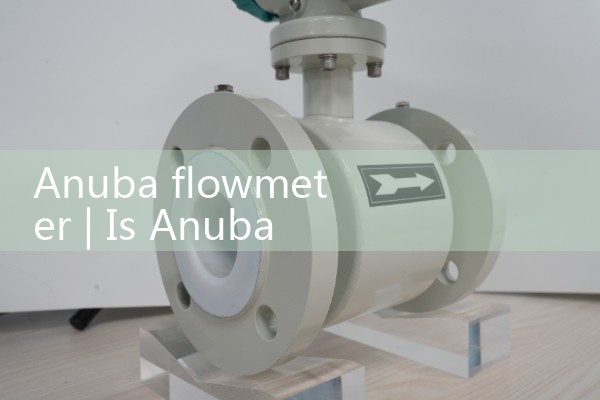
First, the working principle of the sensor part. The Anuba flowmeter uses a special sensor to detect the flow of fluid in the rock, which includes a flow tube with a specific shape and size. When a fluid passes through a flow tube, it experiences resistance and creates a pressure difference, which causes vibration or displacement of the flow tube due to changes in pressure and flow rate. These vibration or displacement signals are converted and processed by electronic devices to ultimately obtain flow data.
Secondly, the working principle of the Annubar flowmeter is based on mechanical principles such as the Bernoulli equation and the law of conservation of momentum.
. When a fluid passes through a flowmeter, the change in velocity causes the conversion of kinetic and potential energy, resulting in displacement of the flow tube. The higher the flow velocity, the stronger the branching force effect generated by the fluid, and the greater the displacement of the flow tube. This mechanical relationship is used to measure the flow rate of the fluid.III. Signal Conversion and Processing: The Annubar flowmeter converts the displacement or vibration of the flow tube into electrical or digital signals.
. The signal output by the sensor is amplified, filtered, and digitized to ensure its accuracy and reliability. Through built-in calculation methods and calibration data, flow meters can accurately calculate fluid flow rates and display them on the instrument or directly output them to other systems for data storage or m