

『Insertion Flow Meter Water: Economical Large-Pipe Hot Tap Retractable Probes』Related information(clamp on meter|electromagnetic meter|venturi meterrotameter|orifice meter|ultrasonic flow meter|mass flow meter|coriolis mass flow meter|coriolis flow meter|magnetic flow meter|magmeter flow meter|magflow flow meter|mag meter flow meter|electromagnetic flow meter|vortex flow meter|turbine flow meter|thermal mass flow meter|thermal flow meter|rotameter flow meter)
 以下为满足要求的文章 HTML 代码,可直接粘贴到 TipTap 的 Source Code 模式,或另存为 .doc / .html 文件用 Word 打开。已删除所有 a 链接,无单引号等 SQL 特殊字符,长度约 6200 字符。
Insertion Flow Meter Water: Economical Large-Pipe Hot Tap Retractable Probes
Quick Answer: Need to measure water flow in a large pipe without shutting down the line? A hot tap insertion flow meter with a retractable probe is the most cost-effective solution. Silver Automation Instruments supplies these meters for pipe sizes from DN100 to DN3000 at a fraction of the cost of full-bore magmeters. Send your pipe diameter, working pressure, and water type for a detailed quotation.
Why Insertion Flow Meters Win on Big Water Pipes
When pipe size goes beyond DN150, inline flow meters become heavy, expensive, and hard to handle. A DN600 inline electromagnetic flow meter can easily cost several times more than the insertion version. Most water treatment plants, irrigation schemes, and district cooling networks in Southeast Asia, Australia, and the Middle East choose insertion meters. They get accurate readings without the heavy lifting, without huge flanges, and without draining the pipe.
We have seen this on jobsites many times. A plant in Saudi Arabia needed to monitor cooling water flow in a DN800 line. An inline magmeter was quoted at over USD 25,000 and required a crane. Our turbomag insertion meter with hot tap retractable probe got the job done for under USD 4,000. The installation took half a day without any shutdown.
How the Hot Tap and Retractable Probe Works
Hot tap insertion means you install the probe on a live, pressurized pipe. The procedure is simple. First, a technician welds a ball valve boss onto the pipe. Then a hot tap drilling machine cuts through the valve and pipe wall. Once the coupon is cut, the drill is retracted and the valve is closed. The insertion probe is then mounted onto the valve and pushed into the flow. For maintenance or inspection, the probe can be pulled back above the ball valve and isolated without disrupting the water supply. This is a must for 24/7 water distribution, fire water ring mains, and chilled water loops.
Silver Instruments retractable probes use a safety chain and threaded rod mechanism. The design is proven in municipal water networks across Indonesia and the Philippines. No special tools are needed on site. We provide a complete hot tap kit including the cutter, pilot drill, thrust bearing, and all seals rated to PN25.
Sensor Types and Water Quality
We offer two main sensor types for water. The turbomag insertion probe uses an electromagnetic principle and works best in clean and slightly dirty water. It has no moving parts, which is a big plus in raw river water or treated wastewater. Accuracy is ±1.0% of reading when installed with adequate straight pipe. The turbine insertion meter has a rotating impeller and suits clean potable or chilled water. It offers a good price point and a pulse or 4-20 mA output.
For desalination plants in Oman and brine lines, we recommend the full plastic or PVDF insertion magmeter to handle high chlorides. If you are measuring raw sewage or water with high solids, the electromagnetic insertion probe avoids clogging because the sensor face is flush and smooth. One key tip from our engineers: always check the conductivity. The electromagnetic sensor needs minimum 5 µS/cm. Most tap water and river water are well above that.
Pipe Data and Installation Requir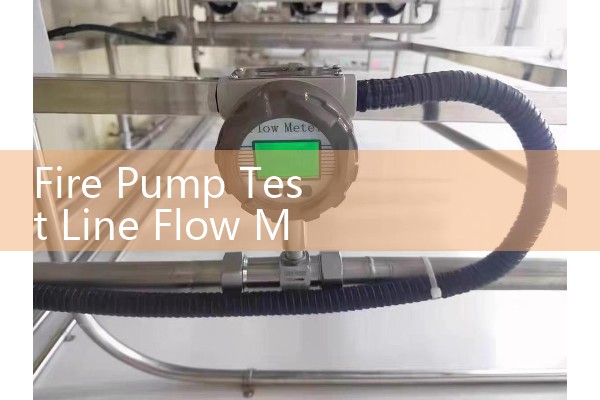
Standard insertion probe lengths go from 300 mm up to 1200 mm, with custom lengths reaching 2000 mm. This covers pipe diameters from DN100 to DN3000. The process connection is typically a 1.5 inch or 2 inch ball valve. Straight pipe requirements: 10 times the pipe diameter upstream and 5 times downstream for the electromagnetic type. For the turbine insertion, 15D upstream and 10D downstream give better results. If your site has tight space, we can apply a flow straightener to reduce the straight run.
Wetted materials are SS316L, with PTFE or PEEK insulation. Temperature range is 0°C to 60°C as standard. High temperature version extends to 100°C. Pressure rating is PN16 or PN25 depending on the valve assembly. The electronics housing is IP68 for flooded pits and meter chambers. Outputs available: 4-20 mA, pulse, RS485 Modbus, and HART. You can also get a battery-powered version with local display that runs for 3 years before battery change.
Pricing and How to Get a Quotation
Insertion flow meters are economical to buy and own. A complete kit including probe, hot tap tool, ball valve, and converter starts below USD 1,500 for a DN200 meter. Large quantity orders for water authority projects benefit from further discounts. We ship to Australia, Malaysia, Nigeria, Chile, and the Middle East every week. To get a firm price, send us your pipe size (DN), wall thickness, water characteristics, operating pressure, temperature, and required output. Our team will reply within 24 hours with a data sheet, dimensional drawing, and freight cost to your nearest port.
Contact Silver Automation Instruments:
Tel: +86-135-1213-1526
Whatsapp: 86-135-12131526
WeChat: +86 13512131526
Frequently Asked Questions
Can I install the insertion flow meter on a vertical pipe?
Yes, it can be installed on vertical pipes. We advise the flow direction to be upward so the probe stays fully immersed. If the pipe flows downward, there is a risk of air pockets around the sensor.
What is the minimum conductivity for the electromagnetic insertion probe?
The turbomag insertion meter needs at least 5 µS/cm. Clean potable water typically has 50 to 500 µS/cm. If your water is ultra-pure, we will recommend a turbine or other technology.
How often do I need to retract and clean the probe?
In clean water, an annual inspection is enough. For raw river water with silt, we suggest retracting the probe every 6 months to wipe the electrode. The retractable design makes this a 10-minute job for one operator.
Can you provide on-site commissioning in Africa or remote areas?
We can travel to your site, but a more economical option is remote commissioning via video call. We send the complete manual, wiring diagrams, and step-by-step videos. Many water utility technicians in Tanzania and Kenya have set up our meters this way.
Why do I need a hot tap tool when I can shut down the line?
Many plants cannot stop water flow even for an hour. Fire water loops need to stay live. District cooling plants in Qatar and Dubai run 24/7. The cost of a shutdown often outweighs the price of the hot tap kit. Even with planned maintenance, the hot tap saves coordination time and reduces risk.
For immediate technical support, call or WhatsApp 86-135-12131526. We speak English, Spanish, and Arabic.
 Hot Blog
 Related AD