

『How Ultrasonic Flow Meter Works: Transit-Time and Acoustic Shift Waves』Related information(clamp on meter|electromagnetic meter|venturi meterrotameter|orifice meter|ultrasonic flow meter|mass flow meter|coriolis mass flow meter|coriolis flow meter|magnetic flow meter|magmeter flow meter|magflow flow meter|mag meter flow meter|electromagnetic flow meter|vortex flow meter|turbine flow meter|thermal mass flow meter|thermal flow meter|rotameter flow meter)
How Ultrasonic Flow Meter Works: Transit-Time and Acoustic Shift Waves
Quick Answer: An ultrasonic flow meter measures flow by sending sound waves through a pipe and timing how fast they travel. Transit-time meters are best for clean water, chemicals, and light oils. Acoustic shift meters handle dirty water, slurries, and raw sewage. If you need a meter for a specific liquid, send us your pipe size (DN), flow range, and liquid type and we will recommend a model.
Most engineers understand the basics but many still mix up the two measurement methods. Transit-time uses two transducers that send and receive ultrasonic pulses diagonally across the pipe. One pulse moves with the flow and one moves against it. The meter measures the time difference between the two signals and calculates flow velocity. This works reliably on liquids with low solids and low aeration.
Acoustic shift technology is a different method entirely. Some manufacturers call it Doppler or frequency shift. A transducer sends an ultrasonic beam into the liquid. Sound reflects off particles, bubbles, or swirling eddies in the flow. The frequency of the reflected sound wave shifts in proportion to the velocity of those targets. The meter uses this shift to calculate flow rate. In practice, wastewater plants, dredging operators, and mining sites use this approach for flows with at least 100 ppm suspended solids and bubbles larger than 100 microns.
Here is the thing. A transit-time clamp-on meter will not work on a pipe full of sludge. And a Doppler meter will give erratic readings on ultrapure water because there are not enough reflectors. We have seen this on customer sites many times. A fish processing factory in Chile tried to install a transit-time meter on a fish oil line. It failed after two days because the oil had fine solids. They switched to an acoustic shift meter and stabilized readings immediately.
Transit-Time Measurement in Detail
Transit-time meters use one or two pairs of transducers. The path can be Z-shaped, V-shaped, or W-shaped depending on pipe size. For small pipes below DN50, a W-path increases the signal travel distance and improves accuracy. For large pipes above DN300, a single Z-path is enough. The meter sends a short ultrasonic burst at a frequency between 0.5 MHz and 4 MHz. The upstream and downstream transit times differ by nanoseconds. A digital signal processor inside the transmitter converts this tiny difference into a flow reading with an update rate of 100 ms to 1 second. The calculation uses the pipe diameter, the path angle, and the fluid sound speed. Because sound speed changes with temperature, a good transmitter compensates automatically using a built-in RTD or a separate temperature input.
Typical accuracy under ideal conditions reaches ±0.5% of reading for a wet-calibrated inline spool body. A clamp-on installation on a carbon steel pipe with decent surface preparation provides ±1% to ±2% of reading. Repeatability is often below ±0.15%. That is good enough for condensate return monitoring, HVAC chilled water billing, and custody transfer of clean chemicals. Silver Instruments offers both inline and clamp-on transit-time models, and we recommend our SIF-300 series for general water and light chemical applications. Send us your pressure in bar, temperature in °C, pipe material and wall thickness, and we will send a quote within 24 hours.
Acoustic Shift (Doppler) Explained
An acoustic shift meter detects the frequency change between transmitted and reflected sound. The transmitted frequency stays constant, typically 640 kHz or 1 MHz. The reflected frequency shifts higher when particles move toward the transducer and lower when they move away. This shift is linear with particle velocity. The meter assumes the particles move at the same speed as the liquid, so the velocity profile is uniform enough for a repeatable measurement. That assumption fails in laminar flow or when solids settle out, but in turbulent flow with a fully suspended mixture, the result is reliable.
We tested a Doppler clamp-on meter last year on a dredge discharge line in Indonesia. The pipe was DN200 carbon steel with a 10 mm wall, carrying sand-water slurry at 4 m/s. The meter tracked flow consistently for six months with just one cleaning of the transducer face. Civil engineering firms and tailings pond operators appreciate how the meter ignores fouling and thin layers of scale until buildup exceeds 6 mm. The output signal is usually 4-20 mA HART, and many models include a pulse output for totalization. Silver Instruments supplies our SIF-200 acoustic shift series for slurry, sludge, and wastewater with suspended solids from 2% to 15% by weight.
But be careful about pipe linings. A thick rubber lining or air-entrained cement lining attenuates the ultrasonic signal and kills echo returns. We always ask customers to confirm the pipe material and lining during the selection phase. Get in touch on WhatsApp at 86-135-12131526 or call +86-135-1213-1526 and describe your pipe. We will tell you honestly if an acoustic shift meter will work on your line.
Installation and Pipe Preparati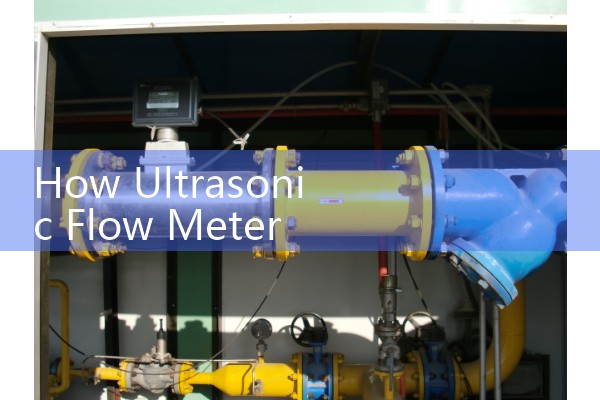
Transducer mounting looks simple, but details matter. For transit-time setups, the pipe surface under the transducers must be clean, smooth, and free of loose paint. A coupling gel or solid acoustic pad fills the microscopic air gaps. On vertical pipes, install the transducers on the side to avoid trapped air. On horizontal pipes, mount them at the 3 oʼclock and 9 oʼclock positions. Never mount on the top of a horizontal line where air pockets collect. We have seen a refinery in the Middle East lose flow data every morning because the transducers sat at the 12 oʼclock position on a horizontal fuel oil line. Once they rotated to 3 and 9, the readings became solid.
For acoustic shift meters, the transducer is often a single unit that both sends and receives. It needs a clean coupling surface as well. The mounting location should have straight pipe upstream and downstream, normally 10D upstream and 5D downstream from a bend or valve. If the pipe is old with heavy rust, grind a small flat spot or use a strap-on mounting bracket with stronger clamping force. Pipe vibration is a real issue. A vibration frequency near the ultrasonic frequency confuses the receiving circuit. Use a vibration-damping bracket in those situations. Ask us about our heavy-duty mounting kits for vibrating pump discharges.
Which Meter for Your Application
Use transit-time meters for clean water, demineralized water, glycol solutions, light fuel oil, edible oil, and liquid chemicals with low viscosity. They shine at flow velocities from 0.1 m/s to 12 m/s. The pipe material can be carbon steel, stainless steel, copper, or PVC. Lined pipes work if the lining is bonded tightly without air gaps. Silver Instruments supplies clamp-on transit-time meters for pipe diameters from DN15 to DN6000. For permanent installations with high accuracy demands, we offer inline spool versions with flanged connections.
Use acoustic shift meters for raw sewage, activated sludge, dredge slurry, paper stock, lime slurry, and abrasive mining flows. Minimum particle concentration is about 100 ppm and particle size should be above 100 microns. Repeatability in these applications lies around ±1% to ±3% of full scale. That is adequate for process control and environmental reporting. If you need custody transfer accuracy on slurry, you need a different technology like a Coriolis meter.
Output and Integration
Both meter types output 4-20 mA, HART, Modbus RTU, or Modbus TCP. Silver Instruments meters integrate directly into SCADA via our standard Modbus register maps. Our transmitters accept a PT100 input for temperature compensation. For aeration-prone streams like activated sludge, choose a model with an automatic gain control that adjusts the signal threshold when bubbles pass. Ask us about the RS485 output option if your PLC cannot accept a direct HART signal.
Common Mistakes to Avoid
Do not mix up transit-time and Doppler. A water treatment plant in the Philippines once bought a cheap transit-time meter online for a sludge line. It showed flow when the pump was off because the meter interpreted random noise as a transit-time signal. Always verify the liquid condition first. If in doubt, collect a sample in a clear bottle. Let it settle for 30 minutes. If you see a sediment layer, you probably need an acoustic shift meter.
Avoid placing transducers near control valves that cause flashing or cavitation. The gas bubbles block the ultrasonic path. Move the sensor at least 20D downstream of the valve. If you cannot move it, add a back-pressure valve to reduce cavitation.
Ignore generic installation guides from unknown sources. We provide a 40-page installation manual with each meter, with photos from actual installations in Brazil, Vietnam, Saudi Arabia, and Australia. WeChat us at +86 13512131526 and we can send a PDF excerpt before you order.
FAQ
Can a transit-time meter measure gas flow?
No. These meters need a continuous liquid column. Gas bubbles larger than about 1% by volume cause signal loss. Use a vortex or thermal mass flow meter for gas.
What is the smallest pipe size for a clamp-on transit-time meter?
DN15 for metal pipes with a special small-pipe transducer and mounting fixture. Accuracy drops slightly because the path length is short, but it works for dosing and injection monitoring.
Does an acoustic shift meter work on clear water?
No. Clear water lacks the reflectors needed for a frequency shift. Even with added air bubbles, the reading is unstable. Stick with transit-time.
How often do transducers need cleaning?
On clean water, almost never. On wastewater with fats and grease, once every 3 to 6 months. On slurry, monthly inspection is a good idea. We offer transducers with a flush port for in-place cleaning.
Which meter works with sulfuric acid 98%?
Transit-time works well on concentrated sulfuric acid. The sound speed is stable and the liquid is clean. Select Teflon or PTFE transducers for chemical compatibility. We deliver meters for acid lines in Latin America regula
 Hot Blog
 Related AD