

『High Viscosity Flow Meter: Positive Displacement Rotary Gear Petroleum Gauges』Related information(clamp on meter|electromagnetic meter|venturi meterrotameter|orifice meter|ultrasonic flow meter|mass flow meter|coriolis mass flow meter|coriolis flow meter|magnetic flow meter|magmeter flow meter|magflow flow meter|mag meter flow meter|electromagnetic flow meter|vortex flow meter|turbine flow meter|thermal mass flow meter|thermal flow meter|rotameter flow meter)

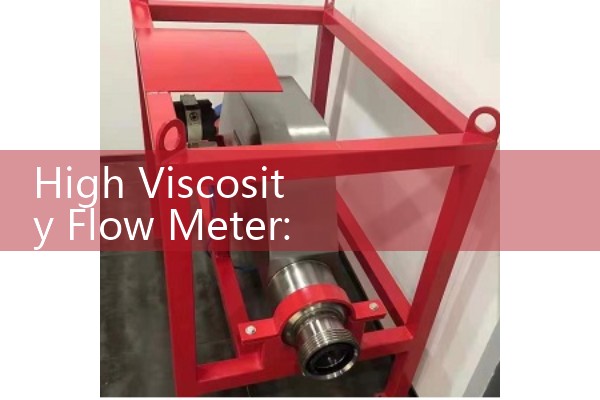
High Viscosity Flow Meter: Positive Displacement Rotary Gear Petroleum Gauges
Quick Answer: Positive displacement rotary gear meters are the standard choice for high viscosity petroleum liquids such as heavy fuel oil, bitumen, and lube oil blending. They deliver high accuracy within ±0.5% of reading across a wide viscosity range from 10 cP to over 100,000 cP. Unlike turbine or electromagnetic meters, gear meters require no straight pipe runs and keep their metrology even when viscosity swings with temperature.
Why Positive Displacement Meters Excel in High Viscosity Service
Many flow meter types fail the moment fluid viscosity exceeds 50 cP. Electromagnetic meters need a conductive liquid, but heavy oils often fall outside that window. Turbine meters lose linearity at low Reynolds numbers typical of viscous flows. Coriolis meters can handle high viscosity but introduce pressure drop and cost that most petroleum terminals try to avoid. Positive displacement rotary gear meters solve this mechanical way. Two precisely machined gears rotate inside a housing. Each pocket of trapped volume represents a known quantity, and the meter counts how many pockets pass. The result is direct volumetric measurement independent of velocity profile, pipe turbulence, or viscosity index. Because the gears displace a fixed volume per revolution, nothing is left to estimation.
We have seen a common mistake on customer sites in the Middle East: a refinery specified a turbine meter for asphalt loading at 180 °C. Viscosity was around 20,000 cP. After two loadings, the bearings washed out and accuracy drifted by 3%. A rotary gear meter with hard carbon bearings and a steam jacket solved the issue. No straight run needed, no flow conditioning, and the meter kept its ±0.5% even during stop-start batching.
Where Rotary Gear Meters Fit in the Petroleum Sector
Crude oil custody transfer in West Africa often happens in DN80 to DN150 pipelines with viscosities between 200 cP and 4,000 cP. A typical setup includes a helical gear meter, PT100 temperature probe, pulse transmitter, and a local register. When an API correction is required, Silver Instruments pairs the gear meter with a flow computer and a density meter, quoting a complete skid. Marine fuel loading in Southeast Asia is another strong application. Bunker fuel at 380 cSt behaves differently than diesel. A gear meter with PPS gears and stainless steel housing handles the acidity and the high temperature without cold welding or swelling. Accuracy remains stable trip after trip.
Lube oil blending plants prefer rotary gear meters because the same meter measures base oil at 150 cP, additives at 800 cP, and the blended product at 220 cP without recalibration. Repeatability is what matters in blending, often 0.05% or better. Silver Instruments supplies meters with PTFE or PEEK gears when the fluid contains abrasive additives like molybdenum disulfide. This is common in some Latin American blending facilities where local base stocks carry fine particulates.
Silver Instruments Gear Meter Design Features
Our positive displacement rotary gear meters are built on a modular platform. Sizes run from DN10 for pilot plants up to DN200 for loading arms. Standard body materials are 316L stainless steel, carbon steel with electroless nickel coating, or duplex stainless for high chloride environments. Gear pairs come in hardened steel, 316L, PTFE, PPS, or PEEK depending on fluid chemistry and solids content. Bearings are the most sensitive component. We specify tungsten carbide bearings for abrasive services and carbon graphite bearings for self-lubricating high temperature use. A heated jacket is optional for fluids that solidify at ambient temperature, like bitumen, wax, or heavy residual fuel. The jacket uses steam, hot oil, or electric trace heating.
On the electronics side, every meter can be fitted with a pulse output, 4-20 mA HART, or Modbus RTU. Most petroleum applications use a dual channel pulse tr
How to Order the Right Meter
Instead of browsing generic datasheets, send us your fluid conditions directly. Tell us the liquid name (e.g., heavy cycle oil, asphalt, lube oil SN500), its operating viscosity in cP or cSt at pumping temperature, the temperature range, line pressure in bar, pipe size in DN, and required flow range in litres per minute or barrels per hour. Also mention if the meter needs hazardous area certification like IECEx, ATEX, or NEC. Our application engineers reply within one working day with a model code, dimensional drawing, and price. Reach Silver Instruments at Tel: +86-135-1213-1526, Whatsapp: 86-135-12131526, or WeChat: +86 13512131526. Most engineers skip the guesswork and just forward a process datasheet. We return a technical offer that includes viscosity correction curves, pressure drop calculation, and material selection notes.
FAQ
Can a rotary gear meter measure water or diesel? Possible but not recommended. The meter relies on fluid to lubricate the gears. Low viscosity liquids like water (1 cP) or diesel (3 cP) provide almost no lubrication and cause rapid gear wear. Use a turbine or Coriolis meter instead. We recommend gear meters only when viscosity stays above 10 cP under all operating conditions.
What accuracy can I expect under changing viscosity? A correctly sized Silver Instruments gear meter holds ±0.5% of reading from 20 cP to 100,000 cP. The bypass clearance is factory set for the customer viscosity band. When temperature swings cause viscosity to drop below 10 cP, slippage increases and accuracy shifts. For applications with wide temperature cycling, we match the clearance gap based on the lowest expected viscosity.
Do I need straight pipe runs before and after the meter? No straight pipe runs are needed with a positive displacement meter. The measuring principle is volumetric, not velocity based. You can mount it directly after an elbow, valve, or strainer. However, we always recommend a Y-type strainer or basket filter 200 micron mesh upstream to protect the gears from debris.
How often does the meter need recalibration? Most petroleum terminals recalibrate gear meters annually or after 12 million litres throughput, whichever comes first. Wear depends on fluid cleanliness, bearing material, and operating hours. Field proving with a master meter or a static prover is common. Silver Instruments offers factory recalibration services with traceable certificates.
Can the meter handle entrained gas or steam? Positive displacement gear meters are designed for liquid-only or liquid with minimal gas entrainment. They can pass small air pockets but accuracy degrades. For two-phase flow like steam-assisted heavy oil, install an air eliminator upstream. We supply complete metering packages that include air eliminator, strainer, meter, and pulse transmitter on one skid.
Take the next step: Send your process conditions: fluid type, viscosity at pumping temperature, temperature range, pipe size, flow range, and hazardous area requirement to us. Silver Instruments will reply with a detailed technical proposal within one business day. Tel: +86-135-1213-1526 | Whatsapp: 86-135-12131526 | WeChat: +86 13512131526. Our team has direct experience with gear meter installations across petroleum depots in Angola, marine bunker stations in Singapore, lubricant blending plants in Mexico, and bitumen terminals in Saudi Arabia. Use that practical knowledge for your project.
 Hot Blog
 Related AD