

『Admag Flow Meter: Yokogawa Heavy Industrial Electromagnetic Sensor Specs』Related information(clamp on meter|electromagnetic meter|venturi meterrotameter|orifice meter|ultrasonic flow meter|mass flow meter|coriolis mass flow meter|coriolis flow meter|magnetic flow meter|magmeter flow meter|magflow flow meter|mag meter flow meter|electromagnetic flow meter|vortex flow meter|turbine flow meter|thermal mass flow meter|thermal flow meter|rotameter flow meter)
Admag Flow Meter: Yokogawa Heavy Industrial Electromagnetic Sensor Specs
Quick Answer
For heavy industrial electromagnetic flowmeter duty, the Yokogawa ADMAG series covers line sizes from DN2.5 to DN500 with pressure ratings up to 40 bar and process temperatures from -40 °C to +160 °C. Common outputs are 4-20 mA HART and pulse. Silver Automation Instruments supplies equivalent magnetic flowmeters with similar liner, electrode, pressure, and temperature ratings for process plants and OEM skids.
What the Yokogawa Heavy Industrial Sensor Series Covers
The ADMAG family includes models like AXF, AXG, CA, and older AE series. Engineers look for Admag flow meter Yokogawa heavy industrial electromagnetic sensor specs when the application involves abrasive slurry, seawater, acid dosing, hot water, or food paste lines. The sensor body is welded or fully molded. No moving parts sit in the flow stream.
In practice the AXF model is the most common reference. It supports line sizes from DN2.5 up to DN500. Process pressure ratings go up to 40 bar depending on flange type and body design. Process temperature ratings range from -40 °C to +160 °C with PFA liner and tantalum electrodes. For small line sizes a ceramic tube option can handle higher temperature.
Key Sensor Specifications
Use this as a reference when you compare a proposed meter. For a DN50 AXF with standard PFA liner and 316L stainless steel electrodes, typical specs are as follows.
Flow range is 0 to 10 m/s. Accuracy is plus or minus 0.5 percent of reading for flow above 0.1 m/s. Minimum conductivity is 5 µS/cm for most water based fluids. For demineralized water or glycol, verify the actual conductivity. Dual frequency excitation gives better zero stability in high solids slurry or fast batching.
Output options include 4-20 mA HART, pulse, and digital communication. Some plants add Modbus RTU or PROFIBUS through a converter. Power supply is normally 100 to 240 V AC or 24 V DC. Housing protection is IP67 or NEMA 4X. Hazardous area versions carry ATEX Zone 1 or IECEx Ex db ratings.
Liner and Electrode Selection
Liner material drives chemical compatibility and temperature limit. PFA liner works for strong acids, caustic fluids, and high temperature liquids. PTFE liner is common for mild chemicals and food grade applications. Polyurethane liner is better for abrasive slurry and mining tailings.
Electrode material selection matters more than most engineers expect. 316L stainless steel works for clean water, wastewater, and weak chemicals. Hastelloy C resists acid and seawater corrosion. Titanium is often used in seawater desalination and chlorinated water. Tantalum works for strong acids but it is expensive. Platinum gold electrodes are used for high temperature or aggressive oxidizing fluid.
Accuracy and Flow Range in Real Applications
We have seen many customer sites where a flowmeter is specified only by line size. That leads to low accuracy at low flow. For a DN100 pipe, a meter with 0 to 500 m3/h range may not read well below 5 m3/h. Check the velocity. Most electromagnetic flowmeters need at least 0.1 m/s to reach stated accuracy.
A paint manufacturer in Southeast Asia replaced an old mechanical meter on a DN80 solvent line. The actual flow was between 1.2 and 6 m3/h. The paint line fluid viscosity was around 120 cP. The correct meter was a DN50 electromagnetic flowmeter with a reduced bore. That kept velocity above 0.3 m/s and improved batching repeatability.
Silver Automa
Installation and Grounding Notes
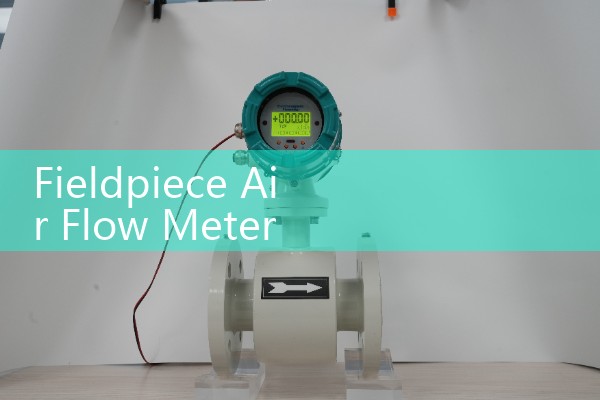
Heavy industrial electromagnetic sensors need proper grounding. Use grounding rings or grounding electrodes when the pipe is lined or made of plastic. For metal pipe, connect the ground strap to both flanges. Do not install the sensor at the highest point of a pipeline where air bubbles collect. Keep the sensor full of liquid at all times.
For wastewater lift stations, install the meter downstream of the pump with 5 to 10 straight diameters upstream and 2 to 3 downstream. Most engineers skip this part in a retrofit. Poor grounding causes unstable readings, not a failed sensor. In many cases the meter is sent back as faulty when the issue is a missing ground ring.
Silver Instruments Equivalent Options
Silver Automation Instruments supplies industrial electromagnetic flowmeters that match or exceed many Yokogawa ADMAG heavy industrial sensor specs. Model range covers DN6 to DN3000. Process connections include flange, wafer, threaded, and sanitary tri clamp. Liners include PFA, PTFE, polyurethane, and hard rubber. Electrodes include 316L stainless steel, Hastelloy, titanium, tantalum, and platinum.
Our standard converter output is 4-20 mA HART plus RS485 Modbus. Accuracy is 0.5 percent of reading for flow above 0.1 m/s. Pressure ratings are PN10, PN16, PN25, PN40, and Class 150. Some high pressure models go to Class 600. We supply ATEX and IECEx certified versions for Zone 1 and Zone 2.
Because we focus on industrial end users and distributors, we ask for real process data. Send us your pressure in bar, temperature in °C, pipe size in DN, and flow range in m3/h or kg/h. That allows us to recommend the correct liner, electrode, and line size instead of quoting a generic model.
Contact Silver Automation Instruments
Tel: +86-135-1213-1526
Whatsapp: 86-135-12131526
WeChat: +86 13512131526
Website: flow-meter.com.au
We answer technical questions about electromagnetic flowmeter selection, grounding, and retrofit sizing.
FAQ
What is the minimum conductivity for a heavy industrial electromagnetic sensor?
Most ADMAG and equivalent Silver Instruments models need at least 5 µS/cm. Some high performance converters can work down to 1 µS/cm but you should confirm with the actual fluid and liner.
Can I replace a Yokogawa ADMAG sensor with a Silver Instruments flowmeter without changing piping?
Yes in many cases. Compare flange standard, face to face length, liner, electrode, and output signal. For DIN flanges, the face to face dimensions usually match EN 1092-1.
What is the typical accuracy of a heavy industrial electromagnetic flowmeter?
Standard accuracy is 0.5 percent of reading above 0.1 m/s. For very low flow, use a reduced bore meter or a smaller line size to keep velocity high.
Does Silver Automation Instruments supply hazardous area electromagnetic flowmeters?
Yes. We supply ATEX Zone 1 and Zone 2 versions with 4-20 mA HART output. Send us your gas group and temperature class.
What liner is best for seawater desalination duty?
PTFE or PFA liner with titanium electrodes is the normal choice. For high pressure seawater, check the flange rating and ask for a stress calculation.
 Hot Blog
 Related AD