

『Kurz Thermal Mass Flow Meter Selection Guide: Matching Corrosive Flare Gases to Steel Probes』Related information(clamp on meter|electromagnetic meter|venturi meterrotameter|orifice meter|ultrasonic flow meter|mass flow meter|coriolis mass flow meter|coriolis flow meter|magnetic flow meter|magmeter flow meter|magflow flow meter|mag meter flow meter|electromagnetic flow meter|vortex flow meter|turbine flow meter|thermal mass flow meter|thermal flow meter|rotameter flow meter)
Kurz Thermal Mass Flow Meter Selection Guide: Matching Corrosive Flare Gases to Steel Probes
Quick Answer: For corrosive flare gas service, do not default to 316L stainless steel. Match the probe material to the gas composition. Silver Instruments recommends 316L for clean fuel gas or low H2S flare lines and Hastelloy C-276 for CO2, H2S, or wet chloride streams. Send gas composition, pressure, temperature, pipe size, and flow range for a direct quote.
Many engineers start with the Kurz thermal mass flow meter selection guide when a flare gas meter spec lands on the desk. The guide makes one thing clear. Probe material is not a secondary check. For corrosive flare gas, the probe can fail in months if the material does not match the gas. We have seen this happen at a gas processing site in Malaysia. A 316L probe in a wet CO2 flare line failed after 14 months. The replacement used Hastelloy C-276 and has been running for 4 years.
What Happens When A Steel Probe Meets Corrosive Flare Gas?
Here is the thing. Flare gas is not a single stream. It changes with process load, catalyst regeneration, and emergency relief events. In Southeast Asia and the Middle East, many flare lines carry H2S, CO2, moisture, chlorides, and ammonia. A 316L probe can handle mild acid gas at low temperature. But in wet acid gas service, pitting and stress corrosion cracking start at the sensor surface. The thermal mass flow meter signal drifts. Then the probe leaks. Most engineers skip this part during bid evaluation and only look at accuracy and turndown. The probe material is what keeps the meter alive.
How Do You Pick Between 316L and Hastelloy C-276?
A standard industrial rule is simple. Use 316L stainless steel for dry flare gas with less than 50 ppm H2S and no free water. Use Hastelloy C-276 for corrosive flare gas with CO2 above 5 percent, H2S above 50 ppm, or wet chloride conditions. Temperature matters too. At 150 °C and above, chloride attack gets aggressive. A paint manufacturer in Southeast Asia chose 316L for a clean biogas flare line. That works. A refinery in Oman needed Hastelloy C-276 because the flare gas had 8 percent CO2 and 200 ppm H2S. Silver Instruments supplies both materials as standard options for thermal mass flow meters.
Which Silver Instruments Model Fits Flare Gas Lines?
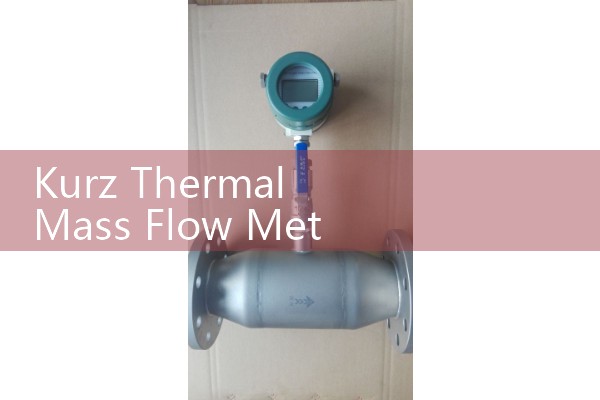
For low pressure flare gas, we recommend the Silver Instruments therma
What Details Do You Need for a Quote?
The fastest way to get a quote is to send us the gas composition, pressure, temperature, pipe size, and flow range. Do not send just the line size. We need the H2S and CO2 percentage, moisture state, and maximum temperature. A flow meter quote without gas composition is a guess. For flare gas, tell us if the line runs continuous or intermittent. Send these details to Silver Instruments at phone +86-25-68650347 or WhatsApp +86-25-52155837. You can also use WeChat at +86 15365082610. We reply within 24 hours.
Frequently Asked Questions
What probe material should I use for corrosive flare gas with H2S and CO2?
Use Hastelloy C-276 if H2S is above 50 ppm or CO2 is above 5 percent. Use 316L only for dry, low acid flare gas.
Can 316L probes survive in wet flare gas?
In most cases they fail early. Free water plus CO2 and H2S creates carbonic acid and sulfide corrosion. A 316L probe can pit in months. Choose Hastelloy C-276 for wet acid gas.
What flow range can a thermal mass flow meter handle on a flare header?
The Silver Instruments TMF-100 handles 0.1 to 100 Nm/s. For flare gas, we size the meter for the normal purge flow and the peak relief flow. Tell us both flow rates.
Which transmitter outputs are supported?
The standard transmitter has 4-20 mA HART. Modbus RTU is optional. The display shows Nm3/h, kg/h, or standard cubic meters per hour.
Does Silver Instruments supply meters for ATEX Zone 1 flare gas applications?
Yes. The TMF-100 is available with ATEX Zone 1 and IECEx Zone 1 certification. Specify the hazardous area classification in your inquiry.
 Hot Blog
 Related AD