


『Magnetic Flow Meter Working Principle: Non-Invasive Conductive Fluid Sensing Laws』Related information(clamp on meter|electromagnetic meter|venturi meterrotameter|orifice meter|ultrasonic flow meter|mass flow meter|coriolis mass flow meter|coriolis flow meter|magnetic flow meter|magmeter flow meter|magflow flow meter|mag meter flow meter|electromagnetic flow meter|vortex flow meter|turbine flow meter|thermal mass flow meter|thermal flow meter|rotameter flow meter)

Magnetic Flow Meter Working Principle: Non-Invasive Conductive Fluid Sensing Laws
Quick Answer
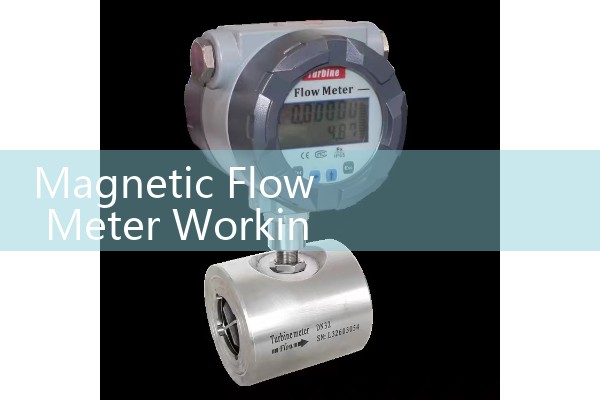
A magnetic flow meter measures volumetric flow by applying Faradays law. A magnetic field crosses a non-conductive pipe liner. When conductive liquid moves through the field, it generates a tiny voltage directly proportional to velocity. The sensor has no moving parts, no flow obstruction, and causes zero pressure drop. That is what makes the sensing method truly non-invasive for the process.
Faradays Law Inside the Flow Tube
Two field coils mount outside a stainless steel flow tube. They produce a constant magnetic field perpendicular to the fluid path. Conductive liquid acts as a moving conductor. Dissolved ions in the water, acid, or slurry create a voltage. Two flush mounted electrodes pick up this signal from the liner wall. A Silver Instruments transmitter converts the microvolt signal into a 4-20 mA HART output. The same board also provides RS485 Modbus and pulse. Our factory calibrates each meter on a gravimetric water rig at 20°C. Typical accuracy is ±0.5% of reading for flow velocities above 0.3 m/s. For DN15 meters in dosing skids, we have seen repeatability better than 0.1%.
Why the Sensing Is Called Non-Invasive
The flow tube is full bore and smooth. A PTFE, PFA, or hard rubber liner insulates the metal body from the fluid. Electrode tips sit perfectly flush with the liner surface. There are no orifice plates, no turbine blades, no bluff bodies sticking into the stream. Because nothing intrudes, the meter handles sludges with 30% solids, pulp stock, and raw sewage with rags. A wastewater plant in Surabaya ran a DN300 Silver Instruments mag meter for five years with zero electrode cleaning. The flush design resists biofilm buildup that clogs differential pressure devices. For abrasive mining tailings, we spec polyurethane liners and tungsten carbide electrode caps. The flow path stays smooth for years.
Conductivity Rules and Real Fluids
Faradays law only works when the liquid conducts electricity. The standard threshold is 5 µS/cm minimum. Tap water in Kuala Lumpur often tests at 200 µS/cm. Seawater in a desal plant sits around 50,000 µS/cm and generates a very stable signal. Acids like 31% hydrochloric, 98% sulphuric, and caustic soda all exceed 200,000 µS/cm. Milk, beer, and fruit juice are also fine. Pure deionized water at 0.05 µS/cm stays invisible to standard mag meters. Diesel, palm oil, and solvents show zero signal. A chemical trader in Vietnam once tried measuring ethanol with a mag meter and got a dead reading. They replaced it with a Silver Instruments Coriolis meter and solved the batch error. Always check a handheld conductivity probe before you choose a mag meter.
Grounding, Straight Pipe, and Liners
The voltage signal is tiny and needs a clean electrical reference. Ground the meter body to the pipe or use grounding rings. For PVC or HDPE lines, pick a model with built in gr
FAQ
What minimum conductivity do I need?
Standard mag meters require 5 µS/cm. For deionized or condensate water we build a high impedance version that goes down to 0.05 µS/cm. Those use capacitive electrodes and a special preamplifier. Send us your water analysis and we will suggest the right electrode type.
Can a magnetic flow meter handle grease in abattoir wastewater?
Yes, as long as the water phase stays conductive and wets the electrodes. Occasional fat slugs do not stop measurement. If the electrode face gets fully coated with non-conductive grease, the signal may weaken. A meat processor in Victoria drains the line weekly and wipes the electrodes with a soft cloth in ten minutes. That keeps the meter within spec.
How do I match liner and electrode to chemicals?
For 98% sulphuric acid at 30°C a PTFE liner with tantalum electrodes works well. For hot sodium hydroxide at 110°C choose PFA liner and platinum electrodes. For slurry with sand, polyurethane liner and tungsten carbide tips last much longer. Tell us the chemical name, concentration, and temperature. We will return a material compatibility table within one working day.
What happens if the pipe is not completely full?
A mag meter needs a fully flooded pipe. If the pipe runs partially empty, the electrodes lose contact with liquid and the output jumps to zero or shows a large error. We recommend installing the meter in a vertical pipe with upward flow. For downward flow, add a backpressure valve or a U-seal downstream to keep the tube full at all times.
Do I need long straight runs before the meter?
Mag meters are less sensitive than most flow technologies. 5D upstream and 2D downstream works for almost any site. On tight retrofits we have achieved ±0.5% with 3D and a simple field trim. For custody transfer applications we stick to 10D upstream and 5D downstream as required by the local metrology authority.
Start Your Quote for a Silver Instruments Mag Meter
Send us your pipe size (DN), fluid type, conductivity in µS/cm, temperature in °C, pressure in bar, output preference (4-20 mA HART, RS485, pulse), and any hazardous area requirement like ATEX Zone 1 or IECEx. Our team covers Australia, New Zealand, Indonesia, Thailand, Vietnam, Saudi Arabia, South Africa, Chile, and the UAE. Reach Silver Automation Instruments directly. Email: [email protected] Tel: +86-135-1213-1526 WhatsApp: 86-135-12131526 WeChat: +86 13512131526
 Hot News
 Related AD