

『Magnetic Flow Meter Price: Commercial B2B Sourcing and Sizing Cost Analysis』Related information(clamp on meter|electromagnetic meter|venturi meterrotameter|orifice meter|ultrasonic flow meter|mass flow meter|coriolis mass flow meter|coriolis flow meter|magnetic flow meter|magmeter flow meter|magflow flow meter|mag meter flow meter|electromagnetic flow meter|vortex flow meter|turbine flow meter|thermal mass flow meter|thermal flow meter|rotameter flow meter)
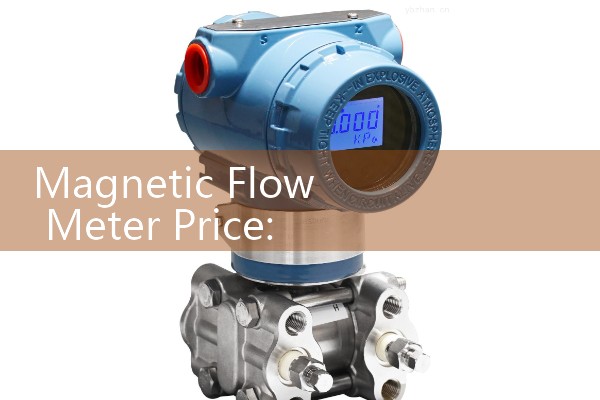
Magnetic Flow Meter Price: B2B Sourcing and Cost Analysis for Industrial Buyers
Quick Answer: A magnetic flow meter typically costs between USD 600 and USD 4,500 for standard industrial models in sizes DN15 to DN300. The final price depends on liner material, electrode type, transmitter features, and whether you need certifications like ATEX or SIL. Send your pipe size, media, pressure, and temperature to Silver Automation Instruments for a same-day quotation.
What Really Drives Magnetic Flow Meter Cost
Most engineers assume size alone sets the price. In practice, four hidden factors have a bigger impact on your budget. Understanding these can save you 30 percent or more on project costs without cutting corners on accuracy or lifespan.
First, the liner material. PTFE and PFA liners work for most clean water and mild chemicals. They are affordable. But if you measure hot concentrated sulfuric acid at 110 °C, you need a ETFE or hard rubber liner. That can add 200 to 600 dollars to the unit cost. A desalination plant in Saudi Arabia learned this the hard way. They ordered standard PTFE meters for brine. The liners swelled within eight months. We replaced them with meters using Neoprene liners. The cost difference was only about 18 percent. Downtime cost was ten times that.
Second, electrode material. Standard 316L stainless steel electrodes work for most water and wastewater. For seawater, brine, or acids, you often need Hastelloy C, titanium, or tantalum. A DN80 meter with 316L electrodes might list at USD 1,100. The same meter with tantalum electrodes can reach USD 2,800. We tell customers to check the chemical compatibility chart first. One food-grade yogurt plant in Mexico switched from tantalum to 316L after confirming their CIP solution concentration. They cut the meter cost by 45 percent and saw zero corrosion in two years.
Third, the transmitter type. A compact integrated transmitter is cheaper to install and smaller. A remote transmitter costs more but keeps the display safe from vibration, flooding, or tight spaces. For a wastewater treatment plant in Vietnam with frequent monsoon flooding, remote transmitters mounted two meters above the pipe saved four meters from water damage. The extra 250 dollars per meter looked small after the first rainy season.
Fourth, certifications and approvals. A basic magnetic flow meter without any certificates might cost USD 700 in size DN50. Add ATEX Zone 1 for a chemical plant in Brazil and the price rises to USD 1,400 or more. SIL 2 certification for safety loops can push the cost above USD 2,000. We always ask whether the certificate is a nice-to-have or a must-have. Many small plants pay for certificates they never audit.
Price Ranges by Pipe Size and Application
Here is what you can expect for standard inline magnetic flow meters, PTFE liner, 316L electrodes, compact type, 4-20 mA HART output, no extra certificates. Prices are FOB China in US dollars.
DN15 to DN25, used for dosing chemicals or small pilot plants: USD 600 to 1,000. A paint manufacturer in Thailand uses six DN15 units on their colorant dosing skids. They prioritize repeatability over absolute accuracy. At this size, the flow range might be 0.5 to 10 L/min.
DN40 to DN100, the workhorse sizes for water supply, cooling water, and light chemicals: USD 800 to 2,200. In this range, most projects we supply go to municipal water plants in the Philippines, Indonesia, and Nigeria. A typical DN80 meter in a well-run water distribution network flows at 40 to 200 m³/h. The meter cost is a fraction of the pipe cost.
DN150 to DN300, common in large water transmission, raw sewage, and mining slurry applications: USD 1,800 to 4,500. For a copper mine in Zambia, we supplied six DN250 meters lined with polyurethane for slurry at 25 percent solids. Grounding rings and special electrode cleaning circuits added 30 percent to the base price. But without them, the meters would fail within weeks.
Above DN300, we usually quote insertion magnetic flow meters. These cost between USD 1,200 and 3,500 depending on the hot-tap valve and rod length. A hydropower station in Peru needed a DN800 insertion meter for cooling water. The total cost was USD 2,100, far less than a full-bore meter which would exceed USD 15,000.
Cost Comparison with Other Flow Technologies
Many buyers compare magnetic flow meters with turbine, vortex, or clamp-on ultrasonic meters. Each has a cost sweet spot.
A turbine meter in DN50 costs about USD 400 to 600, which is lower than a magmeter at USD 900. But turbines need clean fluids and regular bearing replacement. In a wastewater lift station with rags and solids, a turbine fails in months. The magmeter works for years. Over five years, the magmeter is cheaper.
Vortex flow meters for steam often cost USD 1,200 to 2,500 in similar sizes. They handle high temperatures, but not conductive liquids. If you already have steam and want to measure water, you need two different technologies. Here is the thing: magnetic flow meters only work on conductive fluids (minimum 5 µS/cm). S
Clamp-on ultrasonic meters avoid pipe cutting and cost USD 2,000 to 5,000. Their strength is temporary measurement or pipes you cannot shut down. But for permanent installation with good accuracy, full-bore magnetic meters usually read within 0.2 to 0.5 percent error. Clamp-on units often drift to 1 to 2 percent depending on pipe condition. If you need trade custody or precise dosing, the magmeter wins on accuracy per dollar.
Hidden Costs Buyers Forget
We see many procurement teams compare only the hardware price. They often miss these five cost items.
Grounding rings or grounding electrodes. Plastic pipes or internally coated metal pipes require grounding rings to get a proper signal. These can cost USD 80 to 400 each. A water treatment plant in Kenya bought 12 magnetic meters for PVC pipelines. Nobody added grounding rings. The meters drifted by 20 percent until we sent the rings and a local technician fixed them.
Installation and straight pipe runs. Magmeters need 5D upstream and 3D downstream straight pipe. If you install right after a butterfly valve or elbow, flow disturbance causes reading errors. A new installation in Peru used a DN150 meter just 1.5 pipe diameters from a partially open gate valve. The error exceeded 6 percent. They had to rework the pipe spool. The labor cost more than the meter itself.
Cabling for remote versions. A remote transmitter needs a shielded electrode cable and coil cable. Silver Instruments includes 5 meters of cable as standard. For longer runs, you order extra. A mining site in the DRC needed 50-meter cable sets. Cables cost USD 12 per meter. Suddenly a remote solution adds 600 dollars per meter.
Spare parts and long-term maintenance. Most magnetic flow meters have no moving parts. That is their main advantage. But after 8 to 10 years, the liner may erode or the electrodes may coat. We recommend keeping one spare meter for every ten installed in critical processes. A dairy factory in Australia does this. Their downtime for meter swap is under two hours.
Calibration and commissioning. Every Silver Instruments magnetic flow meter leaves our factory with a wet calibration certificate traceable to national standards. If you need third-party calibration like NATA or UKAS, add USD 200 to 500 per meter. For an oil terminal project in Saudi Arabia, this extra step was non-negotiable. But for a small food plant in Jordan, our standard certificate satisfied their ISO audit with zero extra cost.
How to Get a Fast, Accurate Quote
Most engineers skip this part and send a one-line email: "price for magnetic flow meter DN100." We get it. But a good quote needs five data points.
First, fluid name and concentration. Water, slurry, acid, caustic. Concentration matters because 10 percent sulfuric acid at 25 °C is aggressive, but 98 percent at the same temperature is compatible with carbon steel. We choose the liner and electrode based on this.
Second, temperature and pressure. Standard meters go up to 80 °C and 16 bar. Higher values require different liners or flange ratings. If you do not specify, we quote standard. That leads to problems later.
Third, conductivity. Most municipal water is above 100 µS/cm, so no issue. But some food products, ultra-pure water, or solvents are below the 5 µS/cm minimum. A customer in Malaysia tried to measure hot palm oil with a magmeter. Conductivity was zero. We explained and offered a Coriolis meter instead. The project moved forward with the right technology.
Fourth, output and protocol. 4-20 mA HART with pulse is our default. If you need Modbus RTU, Profibus DP, or Foundation Fieldbus, mention it. These options add 100 to 300 dollars but are essential for system integration.
Fifth, specific approvals. ATEX, IECEx, SIL, WRAS, FDA. If you need any, tell us early. We hold certificates for many models but not all combinations are pre-certified. Lead time can shift from 2 weeks to 8 weeks for special certified builds.
Why Silver Automation Instruments for Magnetic Flow Meters
We ship over 1,200 magnetic flow meters every year from our ISO 9001 factory in China. Our team speaks English, Spanish, and Portuguese. We stock standard sizes DN15 to DN300 in PTFE and hard rubber liners. Custom liners and electrodes ship within four weeks. We supply repeat customers in 40 countries from desalination plants in Chile to textile dyeing factories in Bangladesh.
Our technical support does not disappear after delivery. Last year a customer in Nigeria had a meter reading 15 percent low on their irrigation main. We checked photos and data logs over WhatsApp. The problem was a partially closed downstream valve creating backflow. They fixed the valve and the meter returned to normal. No hardware replacement needed.
We do not charge for this kind of support. It is part of our standard offer.
FAQ
What is the minimum conductivity needed for a magnetic flow meter?
Most meters require at least 5 µS/cm. For f
 Hot News
 Related AD