

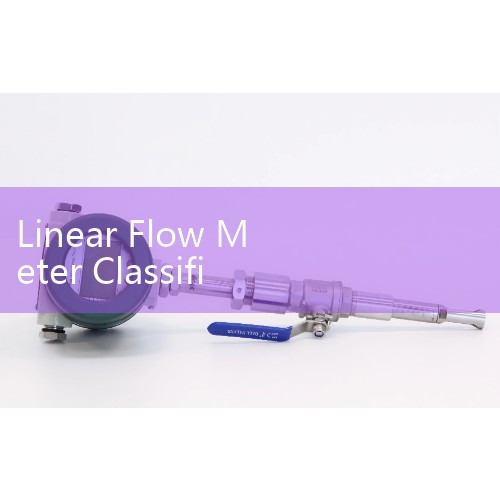
『Linear Flow Meter Classifications: Comparing Constant Turndown Sensor Systems at a Glance』Related information(clamp on meter|electromagnetic meter|venturi meterrotameter|orifice meter|ultrasonic flow meter|mass flow meter|coriolis mass flow meter|coriolis flow meter|magnetic flow meter|magmeter flow meter|magflow flow meter|mag meter flow meter|electromagnetic flow meter|vortex flow meter|turbine flow meter|thermal mass flow meter|thermal flow meter|rotameter flow meter)
Linear Flow Meter Classifications: Comparing Constant Turndown Sensor Systems at a Glance
Quick Answer: Constant turndown sensor systems keep stated accuracy from minimum to maximum flow without re-ranging. Silver Automation Instruments supplies linear flow meters with turndown ratios from 10:1 up to 100:1 for water, gas, solvent, and viscous fluids. Send pipe size in DN, flow range in kg/h or L/min, temperature in °C, and pressure in bar for a direct technical quote.
What Linear Flow Meter Classifications Mean
Linear flow meters give an output signal that tracks flow rate in a straight line. The sensor sees a physical change and converts it to 4-20 mA, pulse, or digital HART. For engineers this matters because the calibration is simpler and the error stays predictable across the span.
The main linear flow meter types in our product range are Coriolis, electromagnetic, ultrasonic, vortex, thermal mass, and oval gear. Each type has a different turndown behavior and a different sweet spot for fluid properties.
Constant Turndown Sensor Systems in Real Plants
Constant turndown means the sensor holds its published accuracy over a wide flow range. It does not mean all meters have the same ratio. A vortex meter may give 10:1 or 15:1 on steam. A thermal mass meter may give 100:1 on compressed air. An electromagnetic meter often gives 50:1 or more on water.
Here is the thing. The quoted turndown is only useful when the meter is sized for the actual pipe and flow range. Most engineers skip this part and then wonder why the low flow readings drift. We have seen this on customer sites many times in Southeast Asia and Latin America.
In practice you should size the meter so the normal flow sits between 20% and 80% of the sensor range. That keeps the linearity and repeatability within the published limits.
Comparing Sensor Types at a Glance
Coriolis meters give direct mass flow, density, and temperature output. They work well on oils, solvents, and food liquids from 0.1 kg/h up to 120 000 kg/h. The turndown is usually 20:1 to 50:1 depending on the sensor size.
Electromagnetic meters are strong for water, wastewater, slurries, and chemicals with conductivity from 5 µS/cm upward. They have no moving parts and work from DN6 up to DN3000. The turndown is often 50:1 to 100:1 for clean water.
Ultrasonic flow meters are good for large pipes and non-invasive clamp-on jobs. They work in clean water, seawater, and some oils. The turndown is typically 40:1 to 100:1 depending on the transducer style.
Vortex meters suit steam, compressed air, and low viscosity liquids. They are simple and strong in high temperature service. The turndown is typically 10:1 to 20:1 because the shedding signal gets weak at low flow.
Thermal mass meters give 100:1 turndown on gas and compressed air. They are common for air compressor monitoring and flare gas lines. The sensor responds to heat transfer so it is sensitive to gas composition changes.
_600x400.jpg)
Oval gear meters are positive displacement and give very high accuracy on fuels, diesel, and oils. The turndown is 10:1 to 50:1 depending on viscosity. They may be used in small lines from DN4 to DN100.
A Southeast Asia Example for Constant Turndown Selection
Last year a paint manufacturer in Vietnam asked us to replace an oval gear meter on a solvent line. The pipe was DN15, flow range 2 kg/h to 60 kg/h, fluid viscosity 0.8 cP, temperature 25 °C. The oval gear meter started to lose repeatability below 4 kg/h.
We supplied a Silver Instruments Coriolis meter with 4-20 mA HART output and PT100 temperature compensation. The metering system now holds ±0.2% of rate from 1 kg/h to 80 kg/h. The plant uses the same signal for batch control and reporting.
Because the meter was sized for DN15 and the normal flow was around 35 kg/h, the sensor operated in its linear zone. The site did not need a separate flow computer or density meter.
Data You Need to Specify a Constant Turndown System
Send Silver Instruments the fluid name, flow range, operating pressure in bar, operating temperature in °C, and pipe size in DN. Include the viscosity in cP if the fluid is not water. Also state the required output such as 4-20 mA HART, pulse, or RS485 Modbus.
For hazardous areas, mention ATEX Zone 1 or Zone 2. Silver Instruments can supply Ex d or Ex ia versions for most linear flow meter types. Explosion proof enclosures are common for gas and solvent applications.
FAQ
What does constant turndown mean for a flow sensor system?
It means the meter holds its stated accuracy and repeatability from the minimum flow to the maximum flow without any re-ranging or manual span change.
Which linear flow meter has the highest turndown ratio?
Thermal mass meters and electromagnetic meters often reach 100:1. Ultrasonic meters can also reach 100:1 on clean water. Coriolis meters usually give 20:1 to 50:1.
Can one meter handle both low and high flow in the same pipe?
Yes if the meter is sized correctly. Normal flow should stay between 20% and 80% of the sensor range. Do not size a meter only for the maximum pipe flow.
What data does Silver Instruments need for a fast quote?
Pipe size in DN, flow range in kg/h or L/min, temperature in °C, pressure in bar, fluid type, and required output. For oils add viscosity in cP.
Do these meters work in ATEX Zone 1 areas?
Yes. Silver Instruments supplies Ex d and Ex ia versions for Coriolis, vortex, electromagnetic, and thermal mass meters. Tell us the gas group and temperature class for the zone.
For a detailed quote, send Silver Instruments the pipe size in DN, flow range, pressure in bar, temperature in °C, and fluid type. Reach our engineers via Tel: +86-25-68650347, WhatsApp: +86-25-52155837, or WeChat: +86 15365082610. We respond to technical quotes within one working day for Southeast Asia, Oceania, Latin America, Africa, and the Middle East.
 Hot Product
 Related AD